

17. janvāris, 2026.
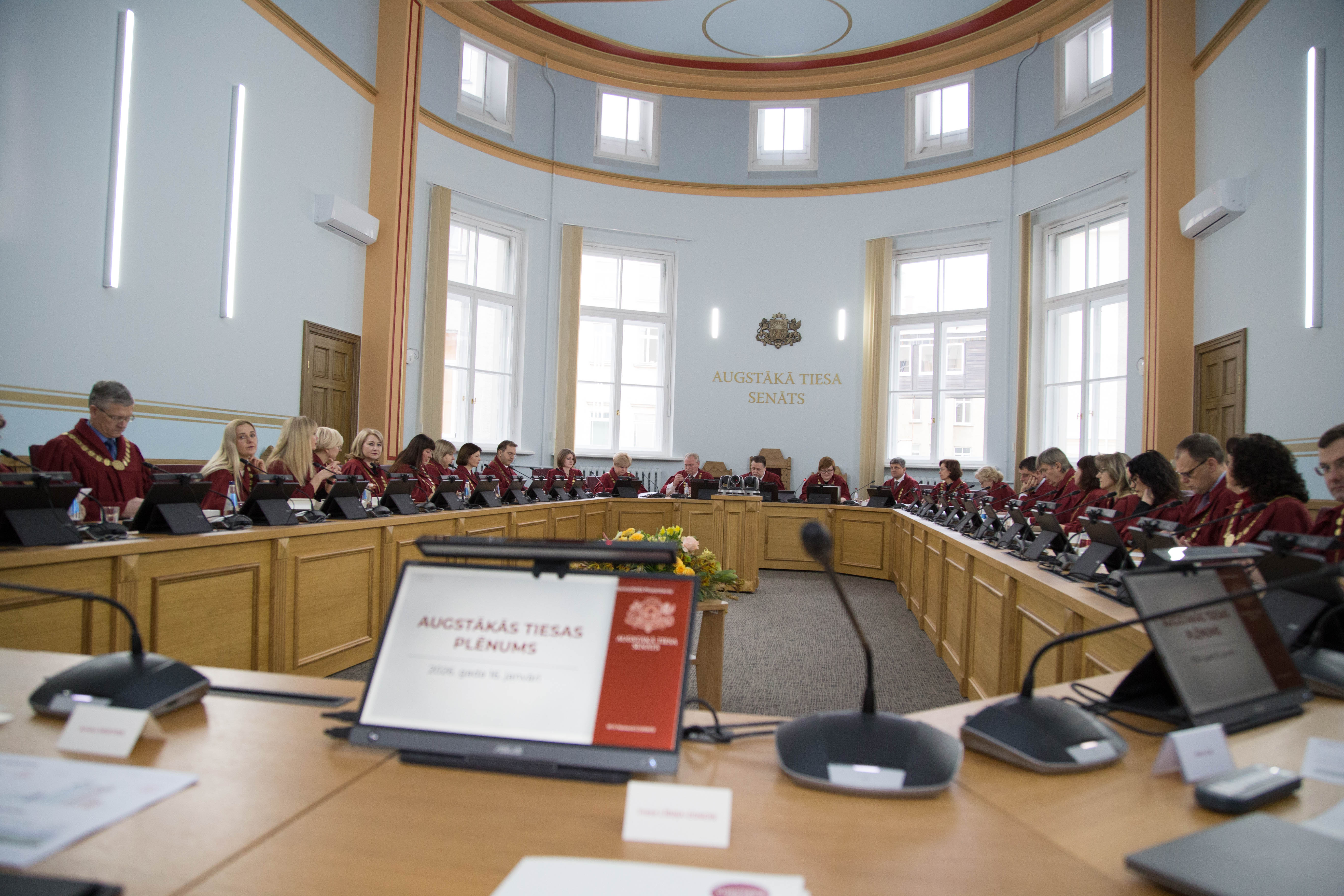
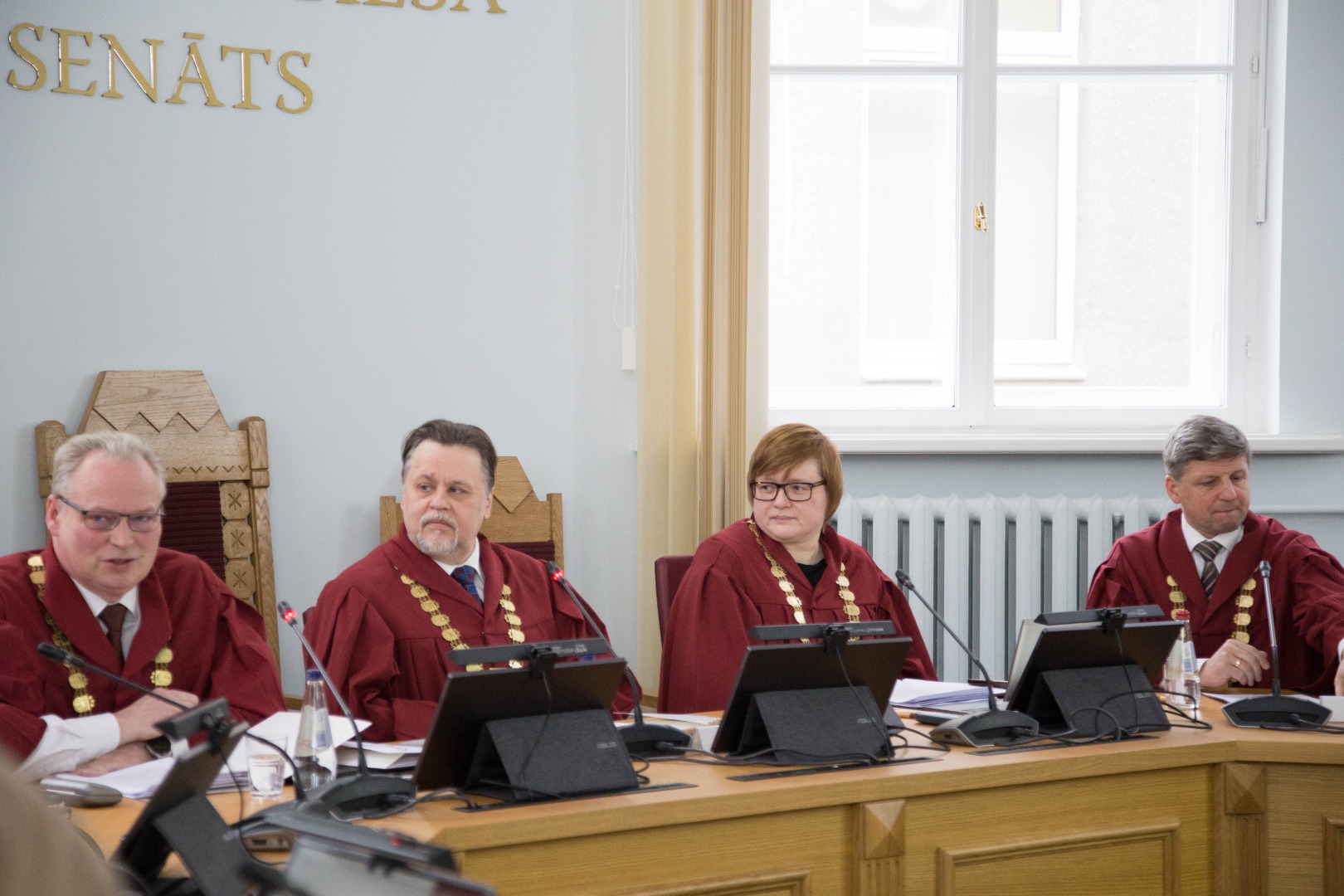
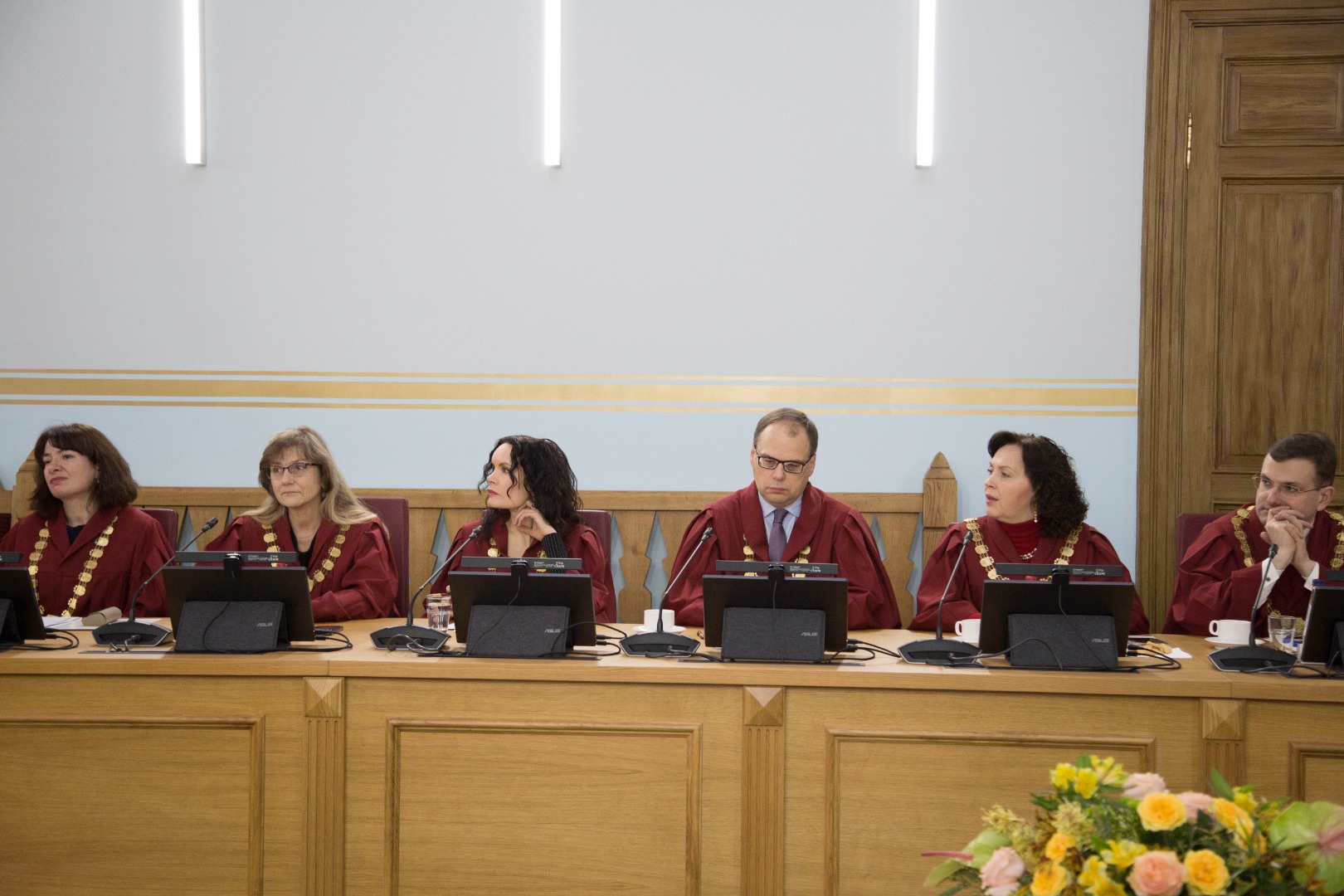
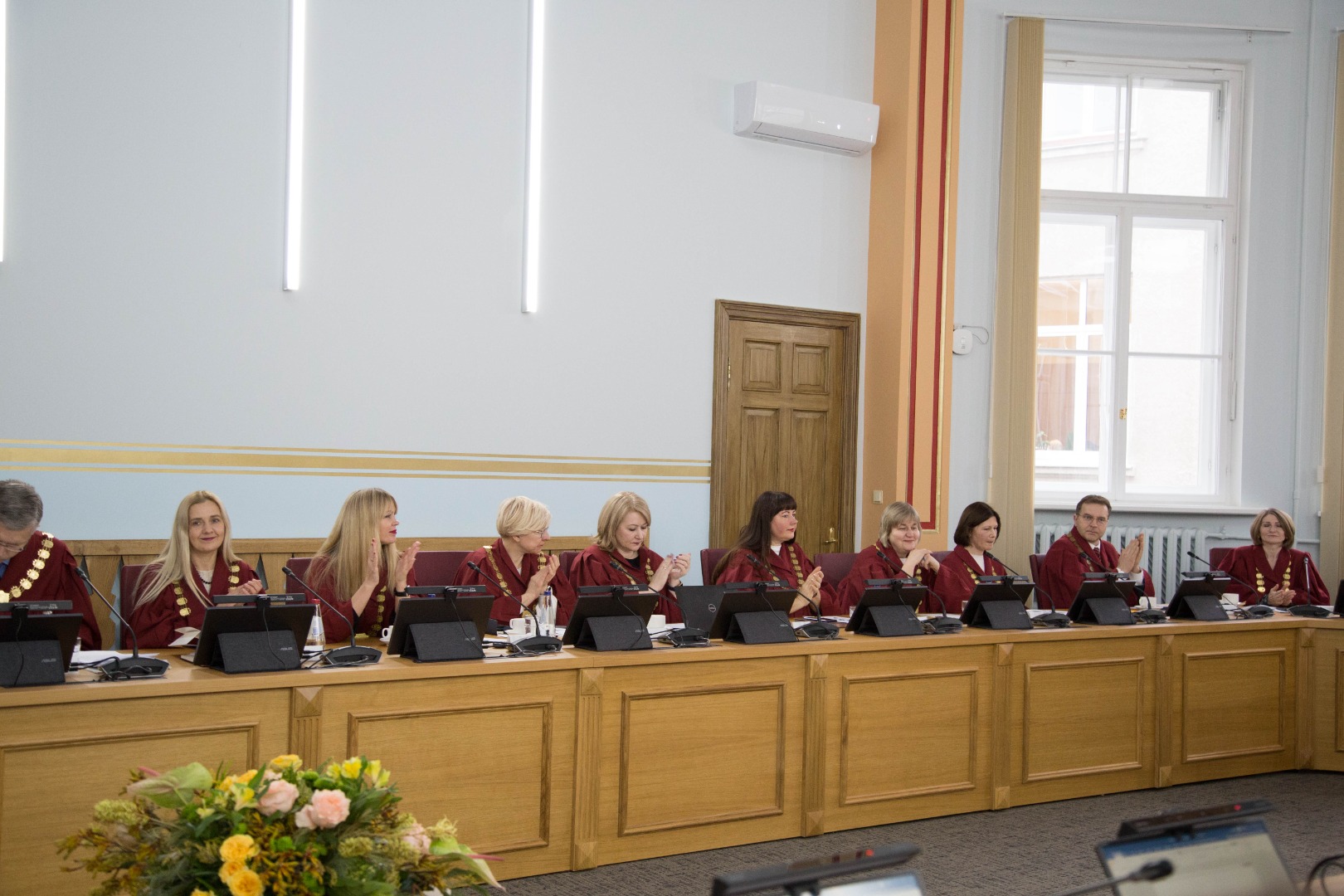
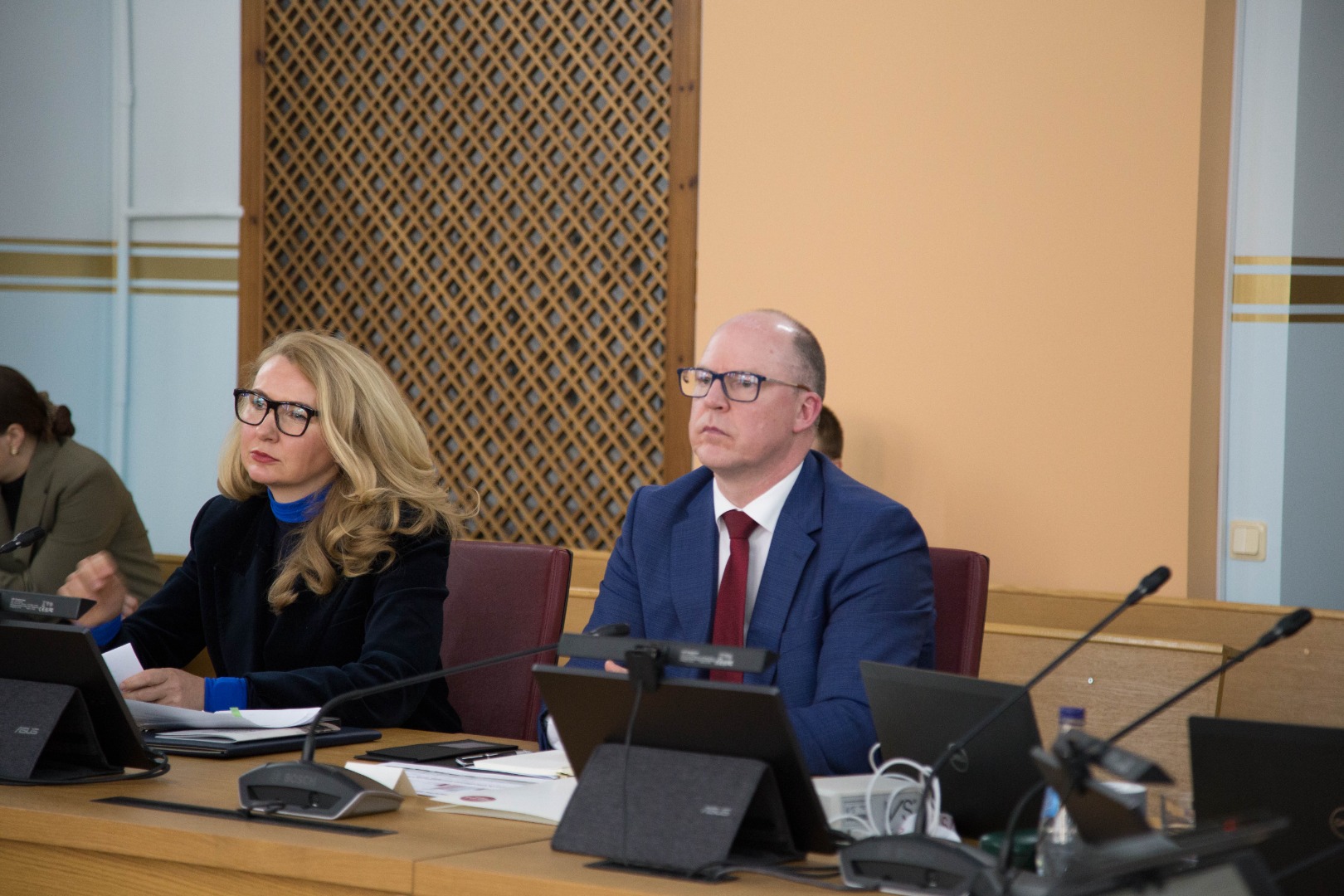
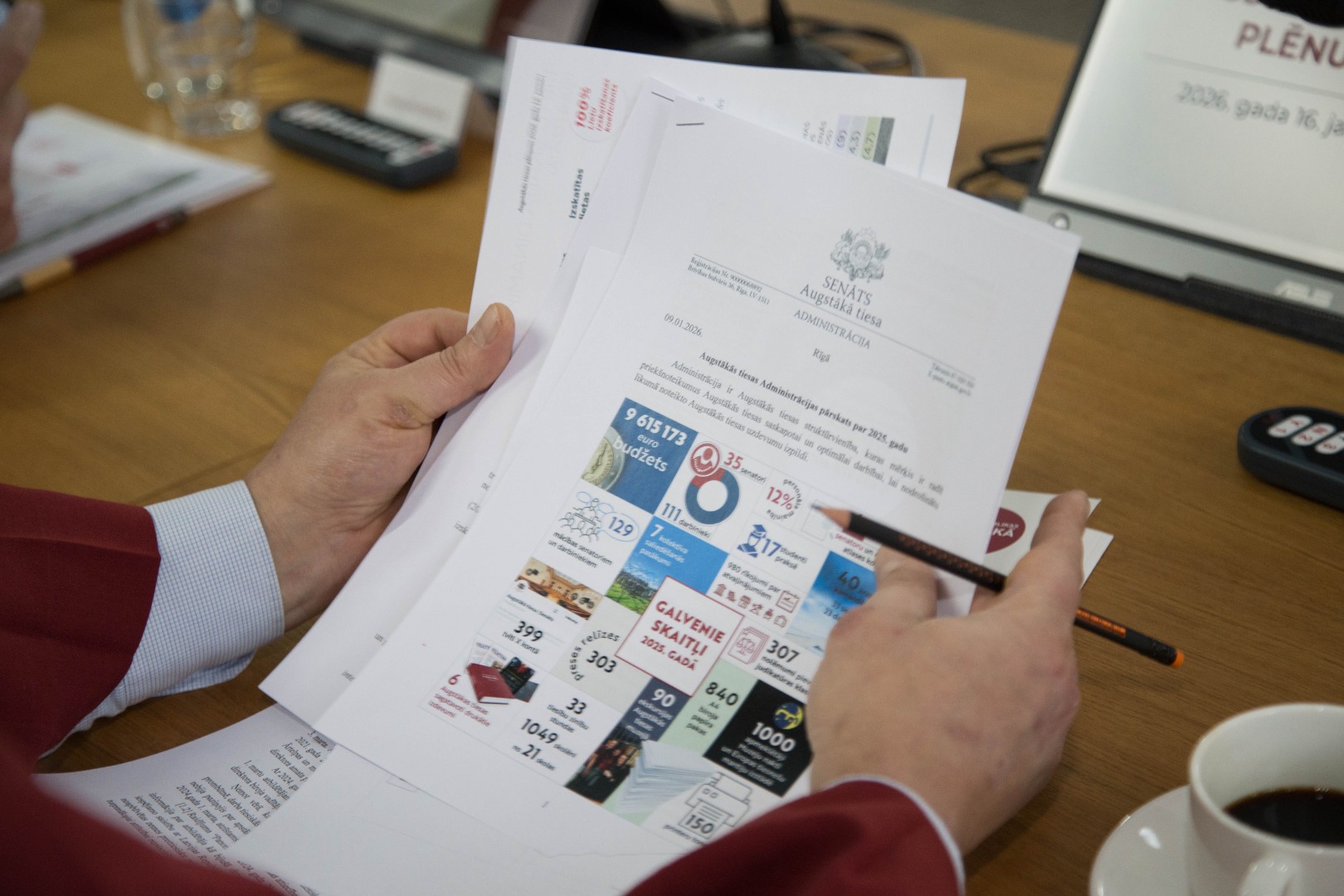
On 16 January, the Plenary Session of the Supreme Court positively assessed the past judicial year. The Senate's main objectives – examining cases in cassation and establishing stable case-law – were honourably fulfilled.
In 2025, 1862 cases were received, which is 7% less than the previous year. The number of cases examined has fallen by 9%, which means that the Senate's case-examination ratio has fallen slightly over the past year, from 100% in 2024 to 98% in 2025. However, as the President of the Supreme Court Aigars Strupišs pointed out, a decrease of a few percent does not warrant alarm, as it will level off in the normal course of work.
The good news is that the length of court proceedings in the Senate has decreased – both in terms of adopting decisions on initiating proceedings and examining cases. The average time taken to deal with a case was 9 months in the Department of Administrative Cases, 4.3 months in the Department of Civil Cases and 4.7 months in the Department of Criminal Cases. The number of cases pending before the Senate for more than three years has also decreased – there are currently 21 such cases, some of which have been suspended due to preliminary questions submitted to the Court of Justice of the European Union or applications filed in the Constitutional Court.
When analysing the Senate’s statistics, the President of the Supreme Court drew attention to the proportion of cases initiated and judgments annulled. The number of refusals to examine cases in cassation is high – 65% in the Department of Administrative Cases, 85% in the Department of Civil Cases, and 73% in the Department of Criminal Cases. As the President of the Supreme Court emphasized, this may be due to several factors, including stable case-law, as well as better quality judgments of regional courts. More significant, however, is the fact that there are increasingly fewer cases in which judgments are overturned. Sometimes, departments initiate a case even when it is clear that the judgment is not going to be amended, but the case is still important for the development of case-law. The President of the Supreme Court, however, urged to carry out a more critical assessment of the principle of professional economy and to take into account that case-law is not shaped by Senate’s judgments alone.
What regards the activities of the Supreme Court in 2026, Aigars Strupišs pointed out that a new operational strategy of the Court for the next four years has been approved. The main objective remains unchanged and is stipulated by the law, namely the development of uniform and stable case-law. In addition, there are instruments to achieve this goal such as more efficient use of internal processes and resources, cooperation and dialogue both between courts and with other state institutions, and dialogue with the public.
A work plan is drawn up for each year in line with the Supreme Court Strategy. Among the tasks set for 2026, the President of the Supreme Court highlighted three of the most important.
First, the study and evaluation of the use and results of implementation of several guidelines is to be carried out. These include the guidelines for the preparation of judgments of first and second instance courts approved by the Judicial Council, and the Senate’s internal guidelines for the preparation of judgments of the Senate, yet particular attention will be paid to analysing the use of the guidelines developed by the Supreme Court for the preparation of cassation complaints.
Another task is the development of an AI search engine for the Supreme Court. A test version of the search engine should be ready by mid-February, and the first fully working version is foreseen to commence operation in June.
The third task is to improve the organisation of work by creating an automated deadline management tool for all Senate’s departments. The President of the Supreme Court also asked the senators to think about ways to shorten the time limits for writing judgments and to pay more attention to balancing the workload of senators.
In conclusion, the President of the Supreme Court expressed gratitude to all senators and staff for their work, as they ensure that the Senate can perform its function of upholding the rule of law with dignity.
About the Plenary Session
On 16 January, at the Plenary Session of the Supreme Court, the senators assessed the work of the Supreme Court in the past year.
The work of the Senate’s departments was analysed by their chairpersons – the Chair of the Department of Civil Cases Normunds Salenieks, the Chair of the Department of Criminal Cases Aivars Uminskis, the Chair of the Department of Administrative Cases Anita Kovaļevska. The report on the work of the Disciplinary Court was presented by its Chair Normunds Salenieks.
In conclusion, the President of the Supreme Court, Aigars Strupišs, summarised the work of the Supreme Court in 2025 and its objectives for 2026.
Furthermore, the Plenary Session was addressed by the Prosecutor General Armīns Meisters and the Minister of Justice Inese Lībiņa-Egnere.
All reports and speeches of the Plenary Session will be published in the next issue of the Supreme Court Bulletin.
Information prepared by
Rasma Zvejniece, Head of the Division of Communication of the Supreme Court
E-mail: rasma.zvejniece@at.gov.lv, telephone: +371 67020396, +371 28652211

